


Lime & Hydrated Lime Plant
Why Choose Us
Rich Experience
ECOVACS' more than 20 years of work in smart home robotics has seen the company transformed from a visionary startup into a global corporation.
Strong Production Capacity
GROHE operates five production sites. With three production sites, Germany is the location for innovation, design and development.
Reliable Product Quality
Dedication to cutting-edge innovation and quality assurance is central to ECOVACS' philosophy of R&D.
Professional Technical Team
COVACS' R&D team continues to grow with a team of nearly 800 engineers and specialists in place.
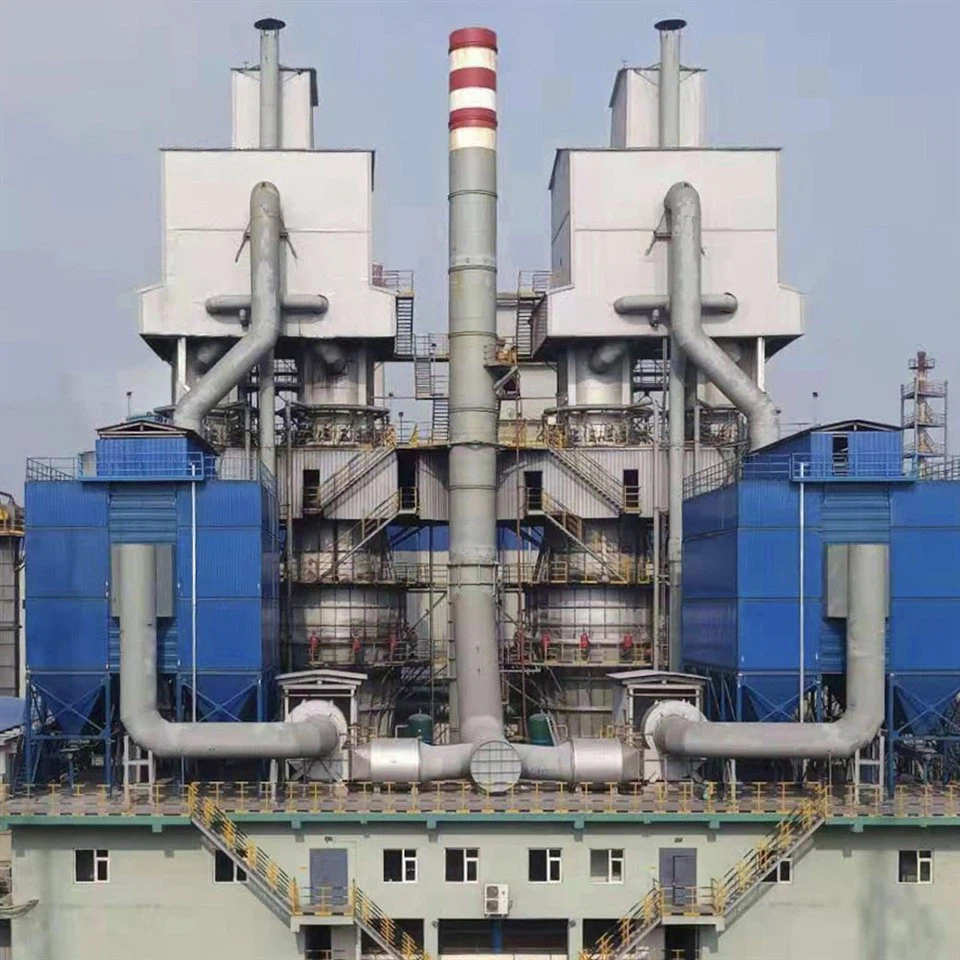

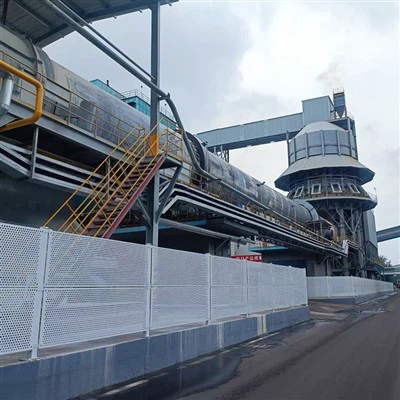


Light Calcium Carbonate, also known as Light Calcium or Precipitated Calcium Carbonate (PCC for short), is made through chemical processing methods. Light calcium carbonate is mainly produced by calcining raw limestone to produce lime, then combining lime with water to produce calcium hydroxide, passing CO2 to form calcium carbonate precipitate, and finally formed by dehydration, drying, and crushing.
Rotary lime kilns are large steel tubes that are lined on the inside with refractory bricks. They are slightly inclined from the horizontal and are slowly rotated on a set of riding rings. Lime mud is introduced at the uphill, feed end and slowly makes its way to the discharge end due to the inclination and rotation.
Advantages of Precipitated Calcium Carbonate
Improved Paper Quality
One of the primary reasons precipitated calcium carbonate is used in paper production is its ability to improve the quality of the final product. PCC enhances the brightness, whiteness, and opacity of paper, making it visually appealing to consumers. Its high brightness and whiteness contribute to the overall aesthetics of printed materials, ensuring that colors appear more vibrant and text is easily readable. Moreover, PCC improves the smoothness of paper surfaces, providing an excellent substrate for printing. This smoothness reduces ink absorption, leading to sharper images and text. As a result, paper products, such as magazines, brochures, and packaging materials, benefit significantly from the incorporation of PCC.
Cost-Effectiveness
The use of precipitated calcium carbonate can lead to significant cost savings in paper manufacturing. By replacing more expensive raw materials like kaolin clay and titanium dioxide, PCC offers a cost-effective alternative without compromising the quality of the paper. Its lower cost per ton makes it an attractive option for paper manufacturers looking to reduce production expenses while maintaining high-quality output. Additionally, PCC can improve the bulk of paper, allowing manufacturers to use less fiber. This reduction in fiber usage not only lowers raw material costs but also contributes to sustainability efforts by minimizing deforestation and promoting responsible sourcing.
Enhanced Printability
Precipitated calcium carbonate enhances the printability of paper products. Its fine particle size and shape contribute to improved ink holdout, which means that ink sits on the surface of the paper rather than being absorbed. This characteristic is particularly advantageous for high-quality printing applications, where clarity and vibrancy are paramount. The improved ink holdout also reduces the risk of bleed-through, ensuring that printed images and text remain crisp and clear.
Environmental Benefits
The use of PCC in the paper industry aligns with growing environmental concerns. PCC is produced from natural limestone, a sustainable resource, and its use helps reduce the reliance on synthetic fillers and pigments. By incorporating PCC into paper products, manufacturers can contribute to a more sustainable industry, as PCC can be recycled along with paper waste. Moreover, the lightweight nature of PCC allows for reduced energy consumption during transportation and handling. This characteristic, combined with its effective bulk properties, leads to lower greenhouse gas emissions throughout the supply chain.
Versatility in Applications
Precipitated calcium carbonate is highly versatile, making it suitable for various types of paper products, including coated fine paper, newsprint, cardboard, and specialty papers. Its adaptability enables manufacturers to tailor PCC to specific requirements, such as particle size distribution and surface treatment, to meet the unique needs of different applications.
Application of Precipitated Calcium Carbonate


Paper
Precipitated Calcium Carbonate is used as the iller in the paper industry due its high purity and brightness which improves optical properties and the quality. Its fine particle size allows it to be used more for paper coating and surface finishing. Using Precipitated calcium carbonate in paper brings in the following advantages:
It enhances optical properties and print characteristics of paper products.
● Improves quality and brightness
● Better coating and surface finish
● Reduce costs through the replacement of expensive wood pulp
Paint Grade
Precipitated Calcium Carbonate is used in Paint Industry as extender/spreader for increasing opacity and porosity. With its high whiteness and ideal distribution, Precipitated Calcium Carbonate improves the processabilityesability characteristics of paint and increases the surface area covered by the paint. Precipitated Calcium Carbonate is an anti-settling agent and also an opacifying agent which enhances the gloss and stability characteristics of the paint. Key benefits of using PCC in the paint industry are:
● Increase opacity and porosity.
● Enhances processability characteristics
● Improves gloss and quality.
Rubber industry
Precipitated calcium carbonate has fine particle size distribution and higher dispensability; it results in improving the strength and flexibility of the rubber products. Use of PCC in rubber has many key benefits such as
● Improvement in strength and stiffness
● Imparts whiteness and quality
● Reduction in the cost.
Plastics
Precipitated Calcium Carbonate, due to its fine crystal structure, is used as mineral filler for improving the rheology and mechanical resistance of the plastic. It is mainly used in PVC as functional filler for improving the mechanic properties and appearance which includes whiteness, shine, and finish. Key benefits of using precipitated calcium carbonate in rubber products are -
● Improves flow control and moulding characteristics.
● Improves strength and toughness.
Tooth paste/Dental Care
PCC is used in toothpaste/tooth powder because of its abrasive nature. It acts as a polishing or cleaning agent in the toothpaste. It also helps in water absorption which maintains the water content in toothpaste. It is used in general purpose toothpaste, speciality dentifrices, and other oral care products Key advantages of PCC in toothpaste products are -
● It is odourless and inert in nature and used as a less expensive filler. It reduces the cost of the product.
● Reduces the weight due low bulk density.
Precipitated Calcium Carbonate (PCC), also called PCC, is a synthetic calcium carbonate. PCC production requires consistent quicklime quality to produce a quality calcium carbonate. The precipitated calcium carbonate production process consists of decarbonating limestone, which separates the CaO (calcium oxide) and CO2 (carbon dioxide). Precipitated calcium carbonate is produced by slaking high-calcium quicklime to create a calcium hydroxide lime slurry, (Ca(OH)2), that is then combined with captured carbon dioxide (CO2). This process generates a very white and pure calcium carbonate with a controlled crystalline structure. An even precipitation process allows good control of the crystallization and particle size of the PCC. Lime reactivity is key to achieving a finer particle size distribution and particle shape of PCC, as well as the stability of the process. Variations in quicklime quality can result in difficulties slaking and inconsistent particle size. This can lead to downtime, not meeting your customers’ needs, additional waste, and impact on your overall bottom line.

Tools Necessary For Manufacturing Precipitated Calcium Carbonate
Mega Mills
Mega mills grind the calcium carbonate through force. The hammer mill crushes the particles and acts as secondary reduction equipment. The calcium carbonate ore is rolled in the grinding rollers. Centrifugal force propels the material even further to the edge. Due to the force, the material falls into the grinding chambers. Here the calcium carbonate is pressed, ground, and crushed. A high-speed rotor blows air with immense force. Industries have different demands for particle size. The air blower separates the unqualified particles from the others.
Air Classifiers
An air classifier is an industrial machine that separates particles by the combination of size, shape, and density. The air classifiers either work alone or with grinding mills. The air classifiers separate calcium carbonate powder from different size particles via centrifugal force. They exert variable aerodynamic drag forces which divide the particles according to their density and diameter.
Air classifier mills
Within the air classifier mills, the grinding and milling of the calcium carbonate are conducted in a closed circuit with air classifiers. The design of grinding depends on factors such as impact, extrusion, friction, shear, and a combination of various forces. The equipment for processing includes Raymond mills, Vertical mills, Ring roller mills, and Ball mills. These mills are accompanied by air classifier mills. Different crushing principles require different machines which depend on the grain size and particle type.
Raymond Mills
In the Raymond mills, the powder is sent between the roller and ring. High pressure grinds the material. The fan sends the powdered material into the analyzer. The remaining particles (not powdered) go for re-grinding.
Ball Mills
The raw material (calcium carbonate ore) is added to the hollow cylinder. The cylinder contains grinding media of various diameters. The cylinder rotates along the horizontal axis. The centrifugal and frictional force crushes the raw material because of drop or roll-down action.
What Is the Difference Between Precipitated Calcium Carbonate and Ground Calcium Carbonate?
Production Process
PCC: Synthetically produced by controlled chemical reaction, mostly with calcium hydroxide (slaked lime) and carbon dioxide.
GCC: Manufactured by the mechanical grinding and crushing of natural limestone or marble extracted from quarries.
Purity
PCC: Purity is higher since it is produced in a controlled process leading to fewer impurities.
GCC: The impurities in it may be from the natural sources used in its production, like the other minerals in the limestone or marble.
Particle Size and Shape
PCC: Rhombohedral or scalenohedral shapes are quite typical among particles that are fine and uniform.
GCC: Particle size and shape depend on the process of grinding and the quality of the natural source, leading to particles of bigger and irregular size.
Surface Area
PCC: Normally has a greater surface area because of its smaller particle size which gives it a high reactivity in some applications.
GCC: Has a smaller surface area as compared to PCC because of its larger particle size.
Applications
PCC: Employed in high-performance applications with specific characteristics such as purity, particle size and shape are critical, like pharmaceuticals, food additives, cosmetics, and high-grade paper products.
GCC: Used in cases where cost is a major factor, and superior purity and specific properties of PCC are not needed, including construction materials, plastics, rubber, and low-grade paper products.
Specialized Uses
PCC: Most suitable in applications which require control of the properties such as in pharmaceutical formulations or premium paper production.
GCC: More frequently used in applications that do not require such accurate control, and cheap bulk material is suitable for the purpose.
Cost
PCC: Practically more costly because of the regulated production and greater purity.
GCC: Cheap due to the easy-to-produce process and the use of natural materials.
Control Over Properties
PCC: Provides exact control over properties such as particle size, shape and purity, which is ideal for applications requiring particular features.
GCC: The properties of the material are variable and depend on the source material and grinding process as a result of which the final product properties are less easily controlled
Reactivity
PCC: In some applications, it is more reactive owing to its increased surface area and properties that can be controlled, which can be beneficial in applications that are associated with chemical reactions or surface coating formulations.
GCC: Might show less reactivity than PCC because of its larger particle size and variability but it can still be good for many industrial uses.
Filler Material
PCC: Regularly employed as a functional additive that improves qualities like whiteness, opacity, gloss, and smoothness in such products as paper, paint, and plastics.
GCC: Often used as a bulk filler, it provides volume and cuts cost in many industrial applications without changing the characteristics of the final product.
New technology
The main drive system adopts a new type of AC frequency conversion speed regulation technology. Compared with traditional electromagnetic speed regulation and DC speed regulation, it is more energy-saving and environmental protection and has a wide range of speed regulation, high efficiency, and high-speed regulation precision, and stable operation.
Installation accuracy and reliability
After welding the base of the supporting device of the supporting wheel and the retaining wheel, and eliminating the welding stress through vibration aging treatment, integrated processing and manufacturing can be carried out by using a large vertical lathe and boring and milling machine, which can guarantee the machining accuracy and shape and position tolerance requirements of each part and significantly improve the installation accuracy and reliability of the whole machine.
Smooth operation
According to the characteristics of limestone and its’ calcination process requirements, the overall structure optimization design was carried out for kiln head and end sections, which solved the problems of return materials of kiln tail and dust leakage commonly existed in common rotary kilns, making the transportation more smooth and natural.
Stable quality
The limestone is uniform in heat, stable in product quality, low in over-burnt rate, especially suitable for calcination of high activity lime for steelmaking;
Flexible process configuration
Vertical preheater can be configured at the end of the kiln to make full use of the high-temperature flue gas calcined in the rotary lime kiln, preheat the limestone from normal temperature to the initial decomposition state, improve the product activity, and facilitate transportation and storage.
Rotary Lime Kiln Working Principle

Limestone is fed into the kiln through the chute at the end of the kiln. Due to the tilt and slow rotation of the kiln body, the limestone rolls along the circumference on one side and moves from the end of the kiln to the kiln head on the other side along the axis. The fuel is sprayed into the kiln from the end of the kiln through the burner for combustion, and the heat is transmitted to the limestone by radiation, convection and conduction.
After the limestone is calcined into quicklime during the moving process, it is discharged from the end of the kiln, and the high-temperature flue gas enters the dust removal system from the end of the kiln.
Design of Rotary Lime Kiln
When designing rotary lime kiln, we should pay attention to many things, not only safety but also reasonable design. In the design of rotary lime kiln, there are mainly the following requirements:
● The design of the rotary lime kiln shall be determined comprehensively according to the production requirements of the firing system and the original and fuel conditions as well as the configuration of preheaters, precalciners, and coolers.
● The length-diameter ratio (L/D) of the preheater kiln and the precalciner kiln is suitable for 11-16.
● The slope of preheater kiln and precalciner kiln should be 3.5-4%; Speed: Pre-decomposition kiln should be 3.0-3.5r/min, preheater kiln should be 2.0-2.5r/min; the speed range is 1:10.
● Forced air cooling should be adopted for the burning zone of rotary lime kilns.
● Rotary lime kiln firing zone should have temperature detection measures.
● The main motor of the rotary lime kiln should adopt infinitely variable speeds, and the auxiliary drive should be set up. The auxiliary drive should have a backup power source.
How to Start a Rotary Lime Kiln
1. Start exhaust fan with damper completely closed. When fan has reached operating speed, open damper to provide sufficient draft at the firing hood to prevent smoke from puffing out around the hood when the oil is ignited. The amount of draft required will vary, depending upon the particular installation, but in most cases a draft of 0.05 to 0.10 in. water column will be sufficient.
2. Start oil burning system at a low rate in accordance with instructions supplied by manufacturer of the burning equipment.
3. Reset exhaust fan damper to maintain sufficient draft to prevent hot gases from leaking out around firing hood. This will require a draft of about 0.00 to 0.05 in. water column.
4. Adjust flame to avoid impingement on brick.
5. Rotate kiln 180 degrees every 15 minutes for 1 hour.
6. Start sludge feed at low rate and run kiln at low speed for next hour.
7. Increase oil rate gradually, but keep exhaust gas temperature below 550 F. The kiln should be raised to a bright heat before any product is discharged. The amount of oil required both for starting and for normal operation can be determined only by experience.
8. When the kiln is hot and discharging lime, increase the speed and the feed rate one step at a time to the desired rate. This must be done gradually to insure high quality lime throughout the entire starting-up period.
9. The fuel rate and firing hood draft must be adjusted with each change in kiln speed or feed rate. If an automatic draft controller is used, the draft can now be set at the desired value. The controller will then automatically maintain the desired and preset value.
How to Stop a Rotary Lime Kiln


1. Stop oil flow, kiln feed and exhaust fan, and close fan damper. (However, to prevent dust from blowing out around the firing hood, it may be necessary to open the fan damper slightly.)
2. Continue to rotate kiln at lowest speed for 5 minutes and then stop kiln completely.
3. Rotate kiln exactly 180 degrees every 5 minutes for next hour.
4. Rotate kiln exactly 180 degrees every 10 minutes for the second hour.
5. Rotate kiln exactly 180 degrees every 30 minutes until cool.
6. Do not start exhaust fan until kiln has cooled below red heat. Then open door in firing hood and start exhaust fan to draw cooling air through kiln. Air flow should be regulated with fan outlet damper to prevent overloading of fan motor.
7. In the event of a power failure, the kiln should be rotated with the auxiliary gasoline engine drive in accordance with steps a, b, c, d, and e above.
8. Sometimes a breakdown in the equipment preceding the kiln will necessitate a short period of operation with no kiln feed. Under these circumstances the oil flow rate and exhaust fan settings can be left unchanged if water is run into the feed end of the kiln. The rate of flow should be equal to the rate at which water was entering with the kiln feed. This will impose approximately the same heat load on the feed end of the kiln and maintain the same exhaust gas temperature. Such action will prevent the chain system from being damaged by hot exhaust gases.
Our Factory
Our guiding vision -- "A robot for every family" -- encourages customers to "Live Smart. Enjoy Life" with stylish and functional robots that are more than simple household appliances. We create home service robotics that make life easier, smarter, more efficient and connected, freeing you to spend more time doing what you love, with the people you love. At ECOVACS, we believe our smart home robotics with their unique mobility and spatial awareness capabilities will be an integral part of smart home in the future.


FAQ
As one of the most professional lime & hydrated lime plant manufacturers and suppliers in China, we're featured by quality products and good price. Please rest assured to buy lime & hydrated lime plant made in China here from our factory. Contact us for quotation.
beams kilns, Horizontal kiln, high purity form of calcium carbonate