


Pressure Vessel
Why Choose Us
Rich Experience
ECOVACS' more than 20 years of work in smart home robotics has seen the company transformed from a visionary startup into a global corporation.
Strong Production Capacity
GROHE operates five production sites. With three production sites, Germany is the location for innovation, design and development.
Reliable Product Quality
Dedication to cutting-edge innovation and quality assurance is central to ECOVACS' philosophy of R&D.
Professional Technical Team
COVACS' R&D team continues to grow with a team of nearly 800 engineers and specialists in place.


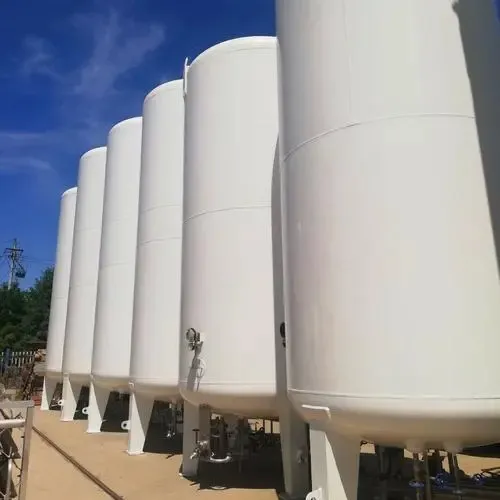
Pressure vessels are sealed containers designed to hold liquids, gases, or vapors at pressures significantly different from the surrounding environment. They are essential in various sectors, including petrochemical, oil and gas, chemical processing, and food production. Common examples of pressure vessels include reactors, flash drums, separators, and heat exchangers.
Advantages of Pressure Vessel
Can Store Large Volumes
A pressure vessel can contain large volumes of substances within a compact space. This is advantageous in the petrochemical and energy industries, where the storage and transport of materials are necessary for efficient production processes. In addition to its capacity for large-volume storage, it can maintain the stored substances’ integrity and stability over time. This ensures that the contents remain unaltered and ready for use.
Can Adapt to Specific Conditions
One way the vessels adapt to specific conditions is through their custom design. They can be engineered to meet precise requirements, accounting for the substance, the operating pressure and temperature, and the space available for installation. This approach ensures that the pressure containers can fit easily into the processes and environments of various applications. The vessels can be constructed from various materials, including metals and composites. This enables engineers to select options best suited to withstand the specific conditions they will encounter. These may include exposure to corrosive substances, extreme temperatures, or high-pressure environments.
Comply with Quality Standards
Pressure vessels are built following quality standards and rules established by organizations such as the American Society of Mechanical Engineers (ASME). These laws govern the whole lifecycle of the container, from design and material selection to construction, testing, and maintenance. Quality standards compliance is especially important in sectors where safety is vital, such as chemical processing and power production.
Can Have Different Forms and Presentations
The vessels can take on various forms, from cylindrical tanks to spherical containers and even more complex geometries. This allows engineers to optimize the shape to maximize space utilization, whether in an industrial setting or a commercial appliance. Additionally, they can have different presentations, meaning they can be installed above ground, buried underground, or integrated into existing structures.
Offer a Wide Variety of Design and Functionality
A pressure vessel serves a multitude of functions across different industries. It stores gases, liquids, and even solids at high pressures or temperatures. Its applications range from maintaining the pressure in water supply systems to containing reactive chemicals in the petrochemical industry. It can also have built-in safety features like relief valves and emergency venting systems.
Have Low Operating Costs
One of the advantages of pressure vessels is their low operating cost, attributed to their minimal maintenance requirements and high corrosion resistance. Unlike other containers and storage methods, which can be adversely affected by oxygen, these vessels are hermetically sealed. They also only house the specific material they are designed to store, usually not oxygen.
Types of Pressure Vessel
Spherical Tank
Spherical container is also called ball tank, the shell is spherical. It is an effective and economical pressure vessel for storing and transporting various gases, liquids and liquefied gases. Compared with the cylindrical container its main advantages are: uniform force; in the same wall thickness conditions, the highest bearing capacity of the ball tank, in the same conditions of internal pressure, spherical container wall thickness required only for the same diameter, the same material of the cylindrical container wall thickness of 1/2 (do not take into account the corrosion margin); in the same volume conditions, spherical containers, the smallest surface area, due to the thickness of the wall, the surface area of the small reasons, generally than the cylindrical container Save 30% to 40% of the steel.
Storage Tank
Sealed containers for storing liquids or gases, storage tanks are used to store acids and alkalis, alcohols, gases, liquids and other refined chemicals. Storage tanks are widely used in North China, according to the different materials are: polyethylene tanks, polypropylene tanks, fiberglass tanks, ceramic tanks, rubber tanks, stainless steel tanks and so on. In terms of the cost-effectiveness of the tank, now the steel lined polyethylene tank is the most superior, which has excellent corrosion resistance, high strength, long life, etc., the appearance of the tank can be manufactured into a standing, horizontal, transportation, mixing and many other varieties .
Heat Exchanger
A heat exchanger is a device used to transfer heat from a hot fluid to a cold fluid to meet specified process requirements, and is an industrial application of convective heat transfer and heat conduction. Heat exchangers can be categorized in different ways. According to its operating process can be divided into three major categories: inter-wall, hybrid, and heat storage (or heat return); according to the compactness of its surface can be divided into two categories: compact and non-compact.
Reactor
The broad understanding of the reaction kettle that there is a physical or chemical reaction of the container, through the structural design of the container and parameter configuration, to achieve the process requirements of heating, evaporation, cooling and low speed mixing function. Reaction kettle broad understanding that there is a physical or chemical reaction of stainless steel containers, according to the needs of different process conditions for the structural design of the container and parameter configuration, design conditions, process, inspection and manufacturing, acceptance need to be based on the relevant technical standards, in order to achieve the process requirements of the heating, evaporation, cooling and low and high speed mixing and blending reaction function.
Material of Pressure Vessel



Carbon Steel
Carbon steel is a type of steel that has a higher carbon content of up to 2.5%. Carbon steel vessels are known for their high tensile strength for a minimal wall thickness, which is suitable for a wide range of applications. They are to impact and vibration. However, carbon steel is difficult to bend and form into shapes due to its high strength. It is also more susceptible to corrosion and rusting than stainless steel since it does not contain chromium.
Stainless Steel
Stainless steel is a type of steel that has a higher chromium content of up to 10.5 – 30% and lower carbon content and trace amounts of nickel. They are known for their excellent chemical, corrosion, and weathering resistance which is attributed to their chromium content. A thin, inert chromium oxide film is formed at the surface to prevent oxygen diffusion to the bulk of the metal. Like carbon steel, it also exhibits high strength for a lower wall thickness. It is easier to form compared to carbon steel due to its increased ductility and elasticity.
Hastelloy
Hastelloy is an alloy composed of nickel, chromium. It is a widely used material for reactors, pressure vessels, and heat exchangers in the petrochemical, energy, and oil and gas industry. It can be used as a material for nuclear reactors. It has excellent corrosion resistance, cracking, and oxidizing and reducing agents. It maintains its strength at high temperatures. It is easily welded, and formed, and shaped due to its good ductility. With proper maintenance, its service life can last up to several decades which increases its cost-efficiency.
Nickel Alloys
Nickel alloys offer good corrosion and weathering resistance, and protection against thermal expansion. The addition of chromium to the nickel alloy further increases its heat resistance. Pressure vessels constructed from nickel alloys are widely used in the oil and gas industry, cryogenic applications, and in other harsh environments. It also has a longer service life. However, it is difficult to work and has a higher fabrication cost. The purity of nickel alloys is important to protect their strength and reliability.
Aluminum
Aluminum is known for its high strength-to-density ratio, which means it has high strength and lightweight at the same time. It is cheaper and more fabricated than stainless steel. It also has good corrosion resistance. Aluminum vessels are commonly used in laboratory-scale applications. However, it is not suitable for high-pressure applications since it has less density, which is one-third of stainless steel.
Titanium
Titanium also offers high strength and rigidity for a minimal wall thickness. It has good corrosion resistance and biocompatibility, and it is also non-toxic. It has a higher melting point than steel and aluminum, hence it is ideal for higher temperature applications. It also has high thermal conductivity and facilitates efficient heat transfer, which is an ideal material for heat exchangers.
Application of Pressure Vessel
Oil and Gas
Pressure vessels are integral in the oil and gas industry for storing and transporting crude oil, natural gas, and various petroleum products. They are used in exploration, production, and refining processes to ensure the safe handling and storage of hydrocarbons.
01
Chemical Processing
In the chemical industry, pressure vessels are used in various processes, including chemical reactions, distillation, and storage of chemicals. They are designed to withstand corrosive substances and high temperatures to ensure the efficient production of chemicals.
02
Food and Beverage
Pressure vessels play a crucial role in the food and beverage industry for processes such as pasteurisation, sterilisation, and fermentation. They are used to ensure the safety and quality of food and beverage products by controlling temperature and pressure.
03
Pharmaceutical
In the pharmaceutical industry, pressure vessels are used in the production of drugs, vaccines, and other medical products. They are designed to meet strict regulatory requirements and ensure the safe production of pharmaceutical products.
04
Aerospace
Pressure vessels are used in the aerospace industry for storing fuel, gases, and other fluids in aircraft and spacecraft. They are designed to withstand high pressures and temperatures experienced during flight and ensure the safety and reliability of aerospace vehicles.
05
Visual Testing
A certified inspector inspects pressure vessels at least once every five years. They will check the vessel’s interior and exterior for any cracks, deformation, blistering, fluid leakage, corrosion, or other damages that might have occurred.
Ultrasonic Testing
This tool uses high-frequency sound waves to detect surface or subsurface flaws and measure the pressure vessel’s wall thickness. The material absorbs the ultrasonic sound waves and turns them into an electrical signal via a transducer. If there happen to be any flaws present, the reflected waves will be disturbed.
Radiographic Testing
A radiographic test involves using x-rays or gamma rays to create a picture of what lies beneath a pressure vessel’s surface. Discontinuities, holes, and density differences will change how waves reflect. The film will then be exposed after this. This method produces consistent results; hence it’s widely used. However, radiation exposure is expensive and requires specialized training.
Magnetic Particle Testing
The machine uses magnetic current to detect surface imperfections in ferromagnetic materials. The inspector runs a magnetic current through the pressure vessel between two probes. If the material is free from defects, the flux flows smoothly through it. But if cracks or other abnormalities are present, some of the magnetic flux will leak out of material around those areas. These imperfections will be more visible once ferromagnetic particles—in either liquid suspension or powdered form—are applied to the hull’s exterior.
Liquid Penetrant Testing
An inspector applies a small amount of liquid called a penetrant to an area with welded seams or plates that may have flaws. Once the penetrant settles after spraying, the excess is wiped from the surface before applying developer, revealing any penetrant that has seeped into cracks.
Tips To Prevent Expensive Design Errors in Pressure Vessels
Thorough Material Assessment
Start with a detailed evaluation of materials to ensure compatibility with the substances the vessel will contain. Inadequate material selection can lead to corrosion, degradation, and, ultimately, failure.
Comprehensive Stress Analysis
Employ advanced stress analysis tools to simulate various operating conditions and identify potential weak points in the design. This step helps avoid overdesign or underdesign, which can lead to costly consequences.
dherence to Codes
Strictly adhere to codes and standards throughout the design and fabrication process. Non-compliance poses safety risks and can result in legal and financial ramifications.
Temperature and Thermal Expansion
Consider the impact of temperature on the vessel and account for thermal expansion. Ignoring thermal effects can lead to stress, deformation, and eventual failure.
Robust Welding Procedures
Ensure all welding procedures meet industry standards and are performed by qualified professionals. Welding defects can compromise the structural integrity of the vessel.
Thorough Quality Control
Implement a stringent quality control process, including regular inspections during fabrication. Early detection of issues reduces the risk of expensive rework and ensures the vessel meets safety standards.
Weld repairs
Anywhere there’s a joint, there’s a potential weakness in a pressure vessel. Especially in pressure differentials, welds can fail under stress. There are many causes of weld failure, some occurring in production, such as porosity in the weld or the inclusion of slag. Others — namely corrosion — occur over long stretches of time as the weld is exposed to the elements and gradually corrodes, eventually causing cracks and other issues.
Nozzle replacement and installation
Nozzles on pressure vessels see a lot of use, and as such, they comprise a common type of pressure vessel repair. Nozzles can wear out over time, and their components can become degraded, sparking a need for replacement. Additionally, installing new nozzles when the need arises is common and falls under the NBIC. Technology can change over the lifespan of a pressure vessel, which can be over 20 years, and replacing older nozzle designs with new, more efficient ones can be a repair well worth making.
Mounting clips for ladders
Working on and around pressure vessels carries some inherent risk. For jobs where ladders must be installed on pressure vessels for access to gauges or making repairs, mounting clips are to be installed according to the code. This will prevent damage to the vessel itself and ensure adequate, ergonomic access to necessary components of the equipment for technicians. Any repairs or additions that require welding non-pressurized components to pressurized components or boundary components of the vessel fall under the NBIC. Such cases require special care to guarantee the soundness of the weld and avoid compromising the vessel’s ability to maintain the pressurized environment.
Inspecting for necessary repairs
Because pressure vessels are pressurized and contain sensitive materials, keeping up with maintenance and repairs is critical. To know when repairs are needed, reduce downtime and keep the pressure vessel operational, one should have a regular inspection program. Pressure vessels should be inspected at least every five years to check for these commonly needed repairs, if not more frequently, depending on the code to which the vessel needs to adhere.
6 Maintenance and Safety Tips for Pressure Vessels
Maximize Awareness
It is difficult to maintain a safe working environment if you do not have adequate understanding of the risks in your environment. For this purpose, it is essential that the staff members get a complete briefing on the contents of each pressure vessel. A training that covers what to do in the occurrence of a breach is also necessary.
Follow All Safety Protocols
Extra attention should be given during the maintenance cycle to ensure that all rules and protocols are followed. This takes into account the execution of follow up measures at the completion of the cycle. Furthermore, throughout the maintenance cycle, it is necessary to inspect and test all safety features of the equipment to ensure they are also in operational order.
Protective Device Installation
Installing protective devices helps ensure that the pressure vessel meets the challenges of daily use. Installing a valve shield, building a secure base, and ensuring that all metal surfaces are covered with the appropriate coating are all key protective steps.
Inspect It Anyway
It is essential for all pressure vessels to undergo inspection. Each inspection should be as systematic as possible. Even if the pressure vessel was just inspected, inspect it again. Pressure vessels function under dynamic conditions and loads. So, even if the previous inspection did not show any concerns, the situation may have changed.
Replace When Necessary
Pumps, valves, and other equipment that are connected should always go through periodic inspection to identify potential concerns. Some industries follow a “replace when needed”, whereas some follow a “replace when necessary” maintenance program. Initially, the difference might appear academic between the two types. Nevertheless, “replace when needed” program lets wear to exceed 75 percent before replacing the part, while a “replace when necessary” allows wear to be only 50 percent.
Install Safety Equipment
Along with saving costs in certain areas of business, it is equally essential to ensure that these cost cutting measures do not affect a secure work environment. Installing additional warning alarms, pressure gauges, and appropriate signage will all go a long way toward determining the workflow of the pressure vessel system and notifying people in the area about potential risks.
Our Factory
Our guiding vision -- "A robot for every family" -- encourages customers to "Live Smart. Enjoy Life" with stylish and functional robots that are more than simple household appliances. We create home service robotics that make life easier, smarter, more efficient and connected, freeing you to spend more time doing what you love, with the people you love. At ECOVACS, we believe our smart home robotics with their unique mobility and spatial awareness capabilities will be an integral part of smart home in the future.


Ultimate FAQ Guide to Pressure Vessel
As one of the most professional pressure vessel manufacturers and suppliers in China, we're featured by quality products and good price. Please rest assured to buy pressure vessel made in China here from our factory. Contact us for quotation.
Bio-reactor, Different Tanks or Towers, pressure vessel